
Writing Nature
The exceptional Molly Aitken kicks off a new series for Wreckage and Shimmer

Welcome to the first instalment of ‘Writing Nature’, a brand-new series that will run alongside my regular essays here on Wreckage and Shimmer. Every month I’ll be interviewing a respected author on the role that nature plays in their practice, and inviting them to share their views about nature writing more generally.
How we write about nature matters. As Marchelle Farrell says in her introduction to the latest Nature Chronicles anthology:
The interlinked quality of the challenges of our age shines a light on our profound interdependence with the other living creatures with whom we share this precious Earth. Ultimately those challenges are often the result of forgetting or suppressing the knowledge that we rely on the rest of the natural world for our survival. Nature writing can remind us of who we are as a species, and of our integral role in the natural order of things. it can shift our perspective, so that we see ourselves and our place in the fabric of life more accurately. From that place of insight, it can urge us to act, and even change our behaviour, so that we might live from a place of generosity and reciprocity with the world around us, rather than from a place of exploitation and greed.
I’m beyond grateful to Molly for agreeing to be the first featured writer here because nature is so deeply and beautifully embedded in her historical fiction.
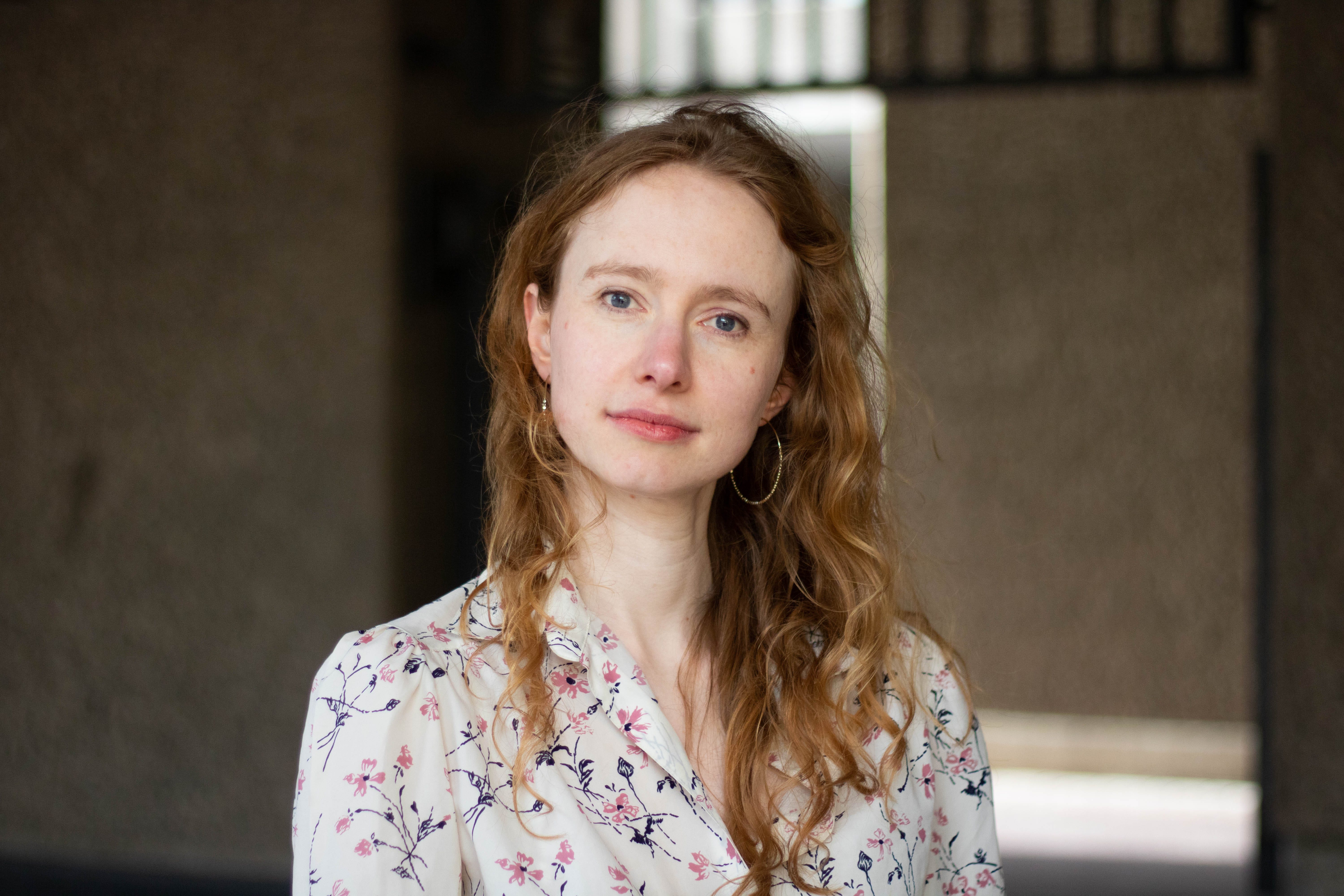
Molly is the author of the Irish bestseller Bright I Burn, a novel about the first woman ever accused of witchcraft in Ireland in 1324. It was shortlisted for the Royal Society of Literature’s Encore Prize for second novels and was a New Yorker and BBC best books of 2024. Her debut, The Island Child, is set on an island off the west coast of Ireland and examines how one girl is shaped by her environment. Molly’s prize-winning short fiction has been published in Ploughshares and dramatised for BBC Radio 4. Find Molly on Instagram and TikTok at molly.aitken.
JD: What role did nature play in your childhood? Was it an important part of your growing-up?
MA: What a beautiful question and a very pertinent place to start. I was a child of the 1990s. We had no TV at home, and my younger sister and I had a lot of freedom to roam. We had an enormous garden with a ‘forest’ of mature trees which became my own little world. I would climb to the very top of trees, shut my eyes and become part of the wind. It was a child’s meditation, but also I believe that place allowed me space to let my imagination roam. The peace and freedom of nature made me a writer.
Later, my family moved to West Cork in Ireland. You could see the bay from our sitting room window. The salt got into everything, ruining all our electronics so even when we got a TV it did not work for long. My sister and I would catch crabs in the estuary, and take long walks by ourselves along winding seaside roads. As teenagers we would complain that living so rurally was incredibly boring, but actually it allowed us space to be in nature. My sister became an organic vegetable grower and I became a writer. If we lived somewhere else I am not sure we would have pursued these lives we now live.
Today, I live in Sheffield, and the one thing I truly miss here is the sea from my teenage years on the coast. I feel an intense peace and simultaneous wildness and changeableness by the sea, that is entirely safe to me.
JD: How does nature influence your creative practice now?
MA: I read somewhere that Dickens used to walk to figure out his stories. I do the same. I will sit beneath a tree with a book of poetry and a notebook. In these moments, I feel my loosest, my most connected to some kind of creative source. This is when I write perhaps not my best work, but when I feel most in tune with my writing. A lot of my first drafts happen outside the house in the fresh air.
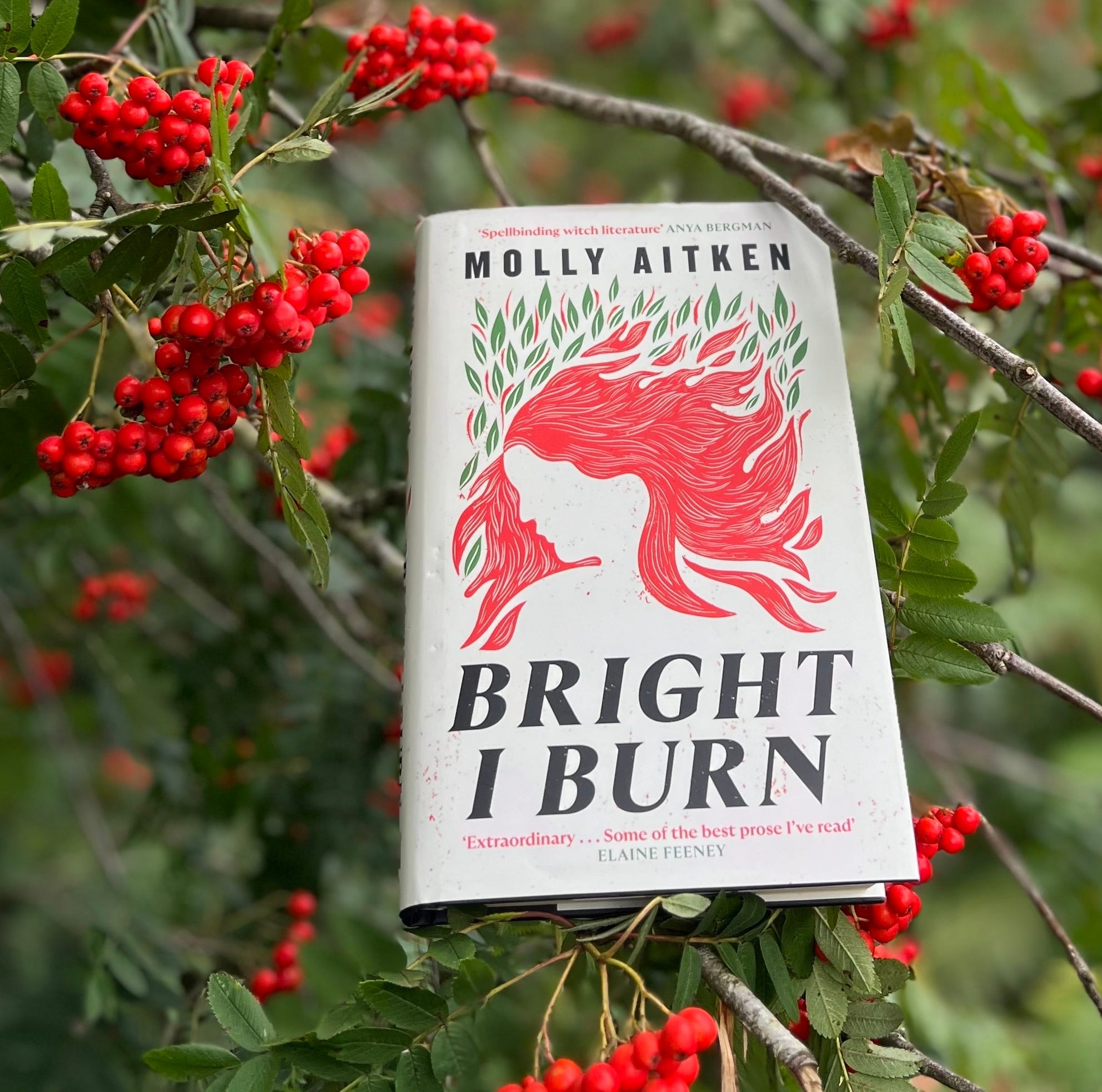
JD: Right from the beginning of Bright I Burn, it’s clear that nature has an essential role in Alice’s story. Could you tell us something about how that plays out across the book?
MA: I was terrified before I began writing Alice Kyteler’s story, because she lived in Kilkenny, a medieval town, and I have an irrational fear of town and city settings in my books. My debut was set on a fictional island inspired by the Aran islands. The sea played an essential role in the story, shaping the moods and challenges of the characters. I could not fathom what kind of creature Alice would be without the influence of nature, but of course, my fear was illogical, because we are all shaped by nature in some way, even if it is our disconnection that shapes us.
The opening scene is of Alice as a child meeting a lynx outside Kilkenny’s walls. This was the first scene that came to me (in a dream), and immediately Alice made sense to me. She was like that wild cat. A creature that needed to run free, to be amidst the trees, to hunt for her food. Yet she was leashed inside the town walls and the life of the town, and the patriarchy, bent her out of shape into someone armoured and cruel.
Her beard is bloody. She stands on the edge of the forest; beside her lies a dead ram, his neck gaping open. Red in the snow.
My father told me all of Ireland’s wildcats were slaughtered by the Romans before those men left our shores, a thousand years ago or more, but once my mother whispered to me, said that when she was still a girl she met a lynx and with her bare lips kissed it.
And here I am, nine winters grown, beyond my city’s walls, and my wildcat crouches so close to me I can smell her breath. Flesh and pine. I reach for her, knowing when I grasp her, she will carry me off into the forest and there, with no one watching, we’ll dance and whirl and run, run, run.
My hand hovers between her ears. I am ready to be taken, to throw back my head and roar, but a whistle slices between us, and her eyes blaze with fear. Or is it rage? Before I can vanish with her she is become a flash of gold between the tree trunks.
I turn, my eyes stinging with the loss of her, and there, beneath Kilkenny’s walls, is a shepherd, his dogs rounding up the flock, and racing towards me across the snow-masked meadow is my mother, her hair flying free from its white cap: the flame of a candle about to blow out.
Bright I Burn, page 1
MA: Alice was famously one of Ireland’s most successful medieval bankers. She was also rumoured to have killed her four husbands. She was and remains a terrifying and fascinating woman. Showing this true core animal self at the beginning, I hoped would help readers, and myself, to understand Alice as a wild thing caged. Alice was the first so-called witch to be associated with cats so I had to play with the theme of wildness and domestication in Bright I Burn. I also gave her a garden by the River Nore. I made it as a place she could escape from her city self, just briefly, and try to reconnect with that child self again. She did not always manage, but the ending of the novel was an attempt to bring her back to nature again.
JD: Which writers have most influenced the way that you write about nature?
MA: To be honest my writing was most influenced by J. M. Synge, an Irish playwright famous for The Playboy of the Western World. But his play that still haunts me is Riders to the Sea. It is a story of one family’s immense loss to the Atlantic. It was a huge influence on my first novel, The Island Child. The way Synge portrays the harshness of Ireland’s weather and landscape just through dialogue and the odd scene direction is extraordinary. He really showed me that actually it is your characters who can show the impacts of nature, rather than long descriptive passages about a mountain or the ocean’s waves.
I read a lot of nature writing and some nature poetry too, but I don’t think any of these writers have influenced my writing so wholly and brutally the way Synge has done. Perhaps it was because I read and watched his plays while I lived in Galway in my late teens and early twenties. It was such an emotional time for me, and something about that calcified his writing inside me. Perhaps because to a more extreme extent his characters were living with the wild Atlantic weather on the west coast, just like I was at the time.
JD: Which books would you recommend as outstanding examples of nature writing?
MA: So many spring to mind. When I Sing, Mountains Dance by the Catalan writer Irene Solà is an exquisite example of the interconnectedness of everything. It is told from the point of view of a mushroom, the mountains, the humans who inhabit the land, a cloud. It is giddy and yet deeply felt. I have read very little else like it. Although as I write this Robbie Arnott’s Flames comes to mind. It is set on the island of Tasmania and he takes up the points of view of a murdered wombat, unlikely river gods and hard boiled detectives. Exquisite prose and immersion in a world that extends the reader’s perception of what is ‘real’, yet once you are done with it it feels completely honest. I don’t hear enough people in the UK talking about this amazing Tasmanian writer.
I am sure I am preaching to the converted here when I say anything by Rachel Carson. Also I can’t go without mentioning the series by Niall Mac Coitir which examines the myths, legends and folklore of Ireland’s trees, plants and animals.
JD: Do you see any problems in the way nature is represented in contemporary writing generally? If so, what are they?
MA: Yet another wonderful question, Jo. I read a lot of contemporary fiction, a lot of novels set in cities, and what I notice is a disconnection between the characters and nature. I do wonder if a lot of their problems might be solved if they were able to connect with the earth on a deeper level. This is not just a problem with literature though. It is a problem with the way so many of us are in many ways forced to live our lives, and this, of course, is reflected in publishing and writing today. I also realise that in my stating this I am exhibiting my privilege. I am lucky to live in Sheffield which is a city with so much access to nature. Most people are not financially free enough to live with nature now.
Another issue with the way nature is represented in contemporary writing is that it is often romanticised and softened. It is sometimes portrayed as a cure when actually it can be harsh and destructive to human life too. I think what I am getting at here is that writers at times may oversimplify nature. I am sure I am guilty of doing this too. But I think it’s important that books are published from authors with wide and diverse interactions with and views on the natural world.
JD: What advice would you give to anyone just setting out to write about nature?
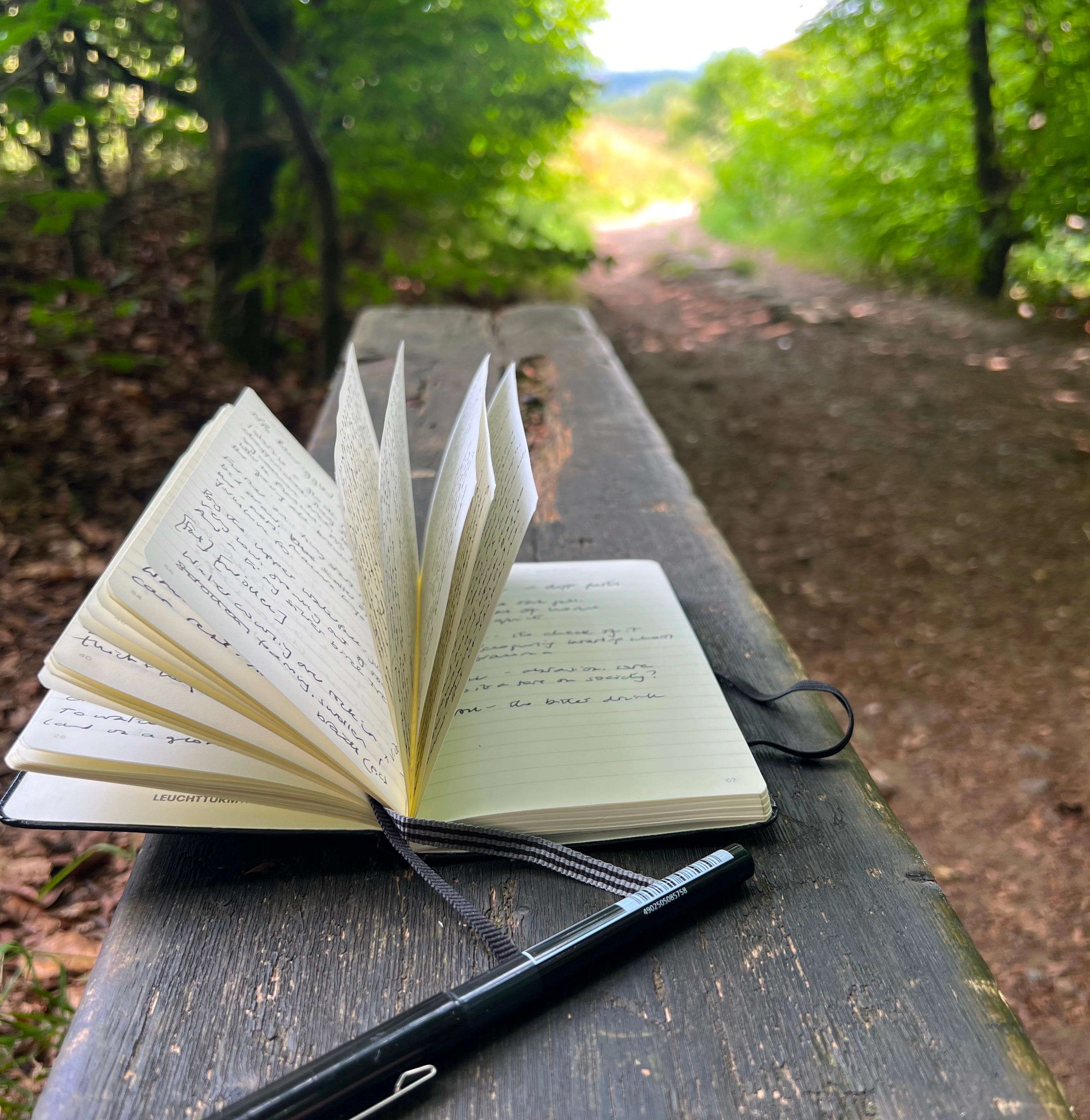
MA: You can start slow and steady. Take a notebook with you on a walk, jot down a few lines. Notice yourself when you are beside water or at the top of a valley. How does this place, these sounds of wind and rain make you feel? Our environments change us, shape us. Your characters, if you are writing fiction, will be shaped in similar ways to you.
Thank you very much, Molly, for sharing your brilliant thoughts with us!
More from Molly
:: Click here to read Molly’s flash fiction ‘Jellyfish’, which is about motherhood and climate change.
:: I highly recommend Molly’s Instagram, which is an absolute feast of pithy, encouraging advice about writing. (I’m not on TikTok but I imagine she’s just as brilliant over there.)
Ooh, two Wreckage and Shimmer posts a month?! You spoil us! Molly kicking it off shows that this is gonna be a great series 😀
Filled with gems! Thank you for this 🙏